


Soapstone is incredibly dense, non-porous, and naturally resistant to stains and bacteria.
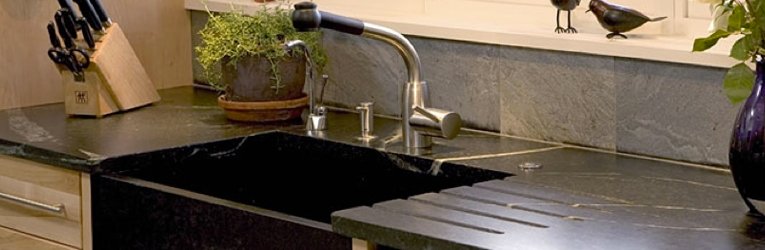
Heat Tolerance (Virtually Heat Proof)
Unlike many other natural surfaces, soapstone is virtually heat proof. Soapstone is even used for masonry heaters because of its excellent thermal qualities.
That means:
- A hot pan is safe and can be placed directly on soapstone surface without harm.
Care (No Sealing Required)
Soapstone countertops are non-porous—unlike marble, granite, and concrete countertops, they do not need to be sealed.
The only maintenance is applying The Original Soapstone Wax™ or The Original Soapstone Oil™ to:
- enhance soapstone’s natural darkening process and develop a rich tone or patina
- Increase the aging process, promote a more even, uniform patina
Routine Cleaning
- What to use: Warm water and mild dish soap (like Dawn or Palmolive).
- What to avoid: Harsh chemical cleaners or abrasive scouring pads (like steel wool), which may scratch the surface.
- Process: Wipe the counter with a soft sponge or cloth, rinse with clean water, and dry with a towel
Cleaning Made Simple
To clean soapstone, use:
- A damp cloth or sponge, warm water and mild soap
Because soapstone is naturally non-porous, it won’t absorb spilled liquids or food, and it is natural bacteria resistant.
If you clean with antibacterial-type cleaners, that’s fine. However, this may slightly slow or reverse the darkening/patina. When this happens, simply reapply The Original Soapstone Oil™ or The Original Soapstone Wax™ as needed.
Restoration (When Your Soapstone Gets Scratched, Ding or Worn)
Traditional soapstone countertops may develop scratches, dings, and natural wear over time—but they age gracefully.
If your soapstone needs restoration, follow these simple steps:
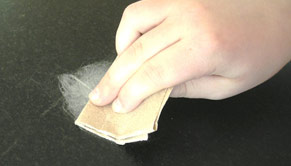
Removing Scratches
For most scratches, treatment with The Original Soapstone Oil™ or The Original Soapstone Wax™ is often enough to minimize or blend them in. For deeper scratches, you we recommend sanding:
- Use 80 or 120-grit sandpaper (based on scratch depth)
- Gently sand in circular motion until the scratch is gone
- Finish with 220-grit then back to 120 grit sandpaper
After sanding:
- Wipe excess dust and apply The Original Soapstone Oil™ or The Original Soapstone Wax™ Repeat multiple times over the next few days to blend with the surrounding areas
Our Countertop Installers Apply the First Treatment, The Original Soapstone Wax™
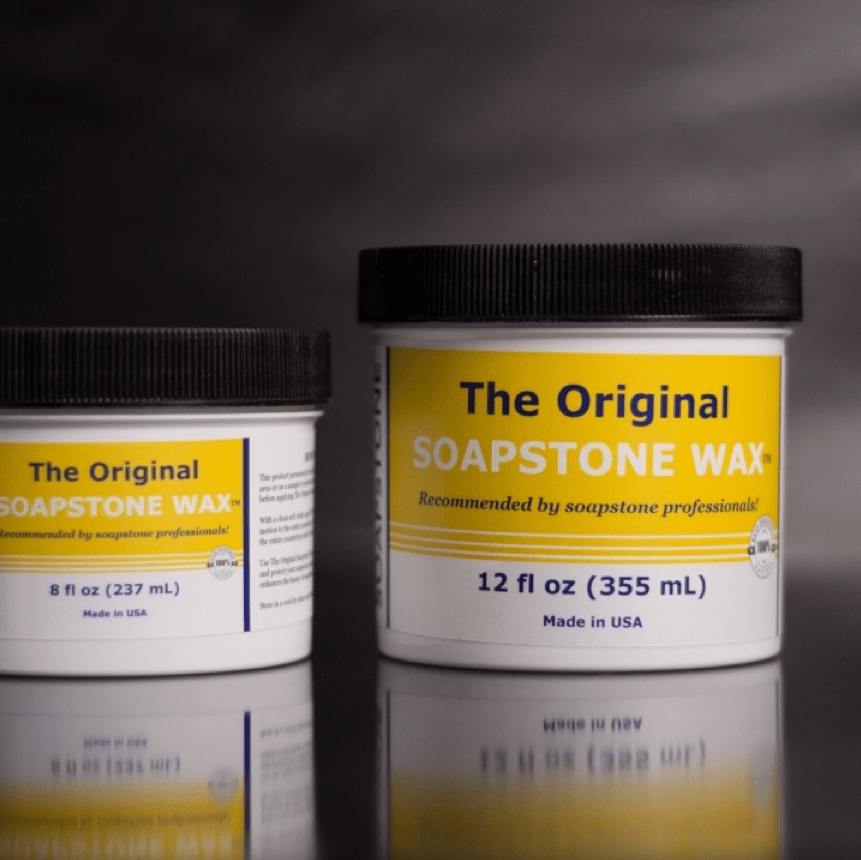
Our installers will apply The Original Soapstone Wax™ to help:
- Increase the natural darkening process
- Accelerate patina and aging
- Enhance the stone’s beauty and detail
In the beginning of the countertop’s life, applying soapstone wax or soapstone oil more frequently will increase the aging/patina process.
To maintain the enhanced look, reapply The Original Soapstone Wax™ or The Original Soapstone Oil™ whenever needed. There is no set schedule, however the more often you treat in the beginning life of soapstone the faster it will age, darken or patina evenly.
Apply as needed to maintain color, patina, and the natural character of the stone.
Reapply as needed
Treating soapstone helps:
- Age/patina faster
- Looks richer and more uniform
- Regain its “new” appearance
Questions About Soapstone vs. Granite, Marble, or Concrete?
If you’re comparing options, we’re happy to help you find the right surface for your home.
Marble is susceptible to both staining and etching, which can create dull spots and ring marks.
Granite is more resistant to scratches, but it is still sensitive to acidic foods, and typically requires careful, consistent cleaning.
Concrete can be sensitive to heat and generally needs regular waxing (often every 30 days) to prevent staining. Concrete countertops usually require a trivet for a hot pot.
Concrete is also much more susceptible to staining than soapstone.
Why Choose Soapstone Over Other Countertops?
The decision is easy: soapstone care is simple.
Soapstone is typically softer than many other stones, however it is also extremely dense and non-porous. It does not allow liquids to penetrate the surface—so it resists staining naturally.
Because soapstone is impenetrable, it will not stain, which is why soapstone was commonly used for chemistry lab tops and acid bath applications.
Harder soapstone is still softer than most stones, but it is twice as hard as traditional soapstone and will be minimally affected by normal use.
Have a question about care & maintenance? Ask the experts.
Contact Us
Garden State Soapstone™ for countertop installation in: N.J., N.Y., P.A., M.D., and C.T.